Fragmenting Societies: The Centre Cannot Hold

featured-post
category - ai
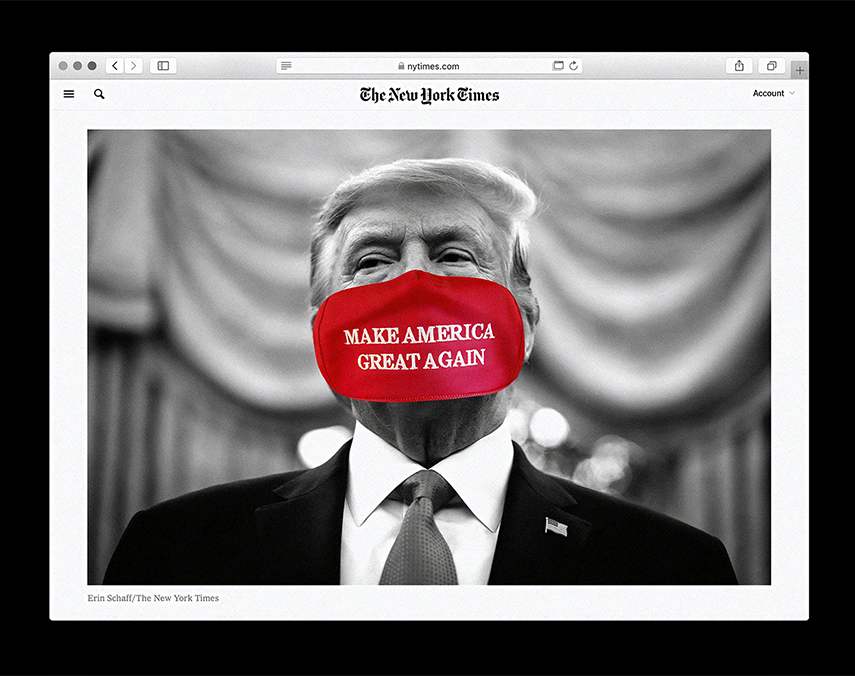
The shared ground that democratic cultures once depended on to maintain stability is crumbling beneath our feet, and many of our politicians, social media platforms and economic structures are aiding and abetting the process.


As the latest in our six-part Global Drivers series – Fragmenting Societies – reveals, something has shifted in how societies hold themselves together, and it isn’t simply the old story of left versus right.

19 August 2026

Author: The Future Laboratory

Image: Helping Britain Invest Through It All by Wonderhood Studios for Hargreaves Lansdown, UK

According to new research from The Future Laboratory, the very infrastructure of collective life – trust, shared reality, civic participation – is being dismantled, often by the same actors positioning themselves as the fix.

‘It began as a story about polarisation,’ says The Future Laboratory co-founder and head of strategic foresight Martin Raymond. ‘But what we’re witnessing now goes deeper than that. The infrastructure of democratic life is being actively dismantled, and the entities doing it are often the same ones proposing to fix it.’

And, as our Fragmenting Societies driver indicates, historic voting patterns back him up. In Spain, the two mainstream parties held 84% of the vote in 2008; by 2019, just 49% (source: Aston University).

‘The infrastructure of democratic life is being actively dismantled, and the entities doing it are often the same ones proposing to fix it.’
Martin Raymond, co-founder and head of strategic foresight at The Future Laboratory

France has seen a similar decline. Economist Gary Stevenson calls it the shattering of a 200-year democratic settlement. Gallup, meanwhile, finds political and governance failure now ranks among the most cited problems worldwide – evidence that when people stop trusting institutions, they stop participating in them.

The Future Laboratory identifies eight interlocking forces driving this collapse: Blatant Politics, New Feudalism, Fractured Nationalism, the K-Economy, Culture Wars, Nostalgia Rising, Neighbourhood Journalism and Me vs We Culture.
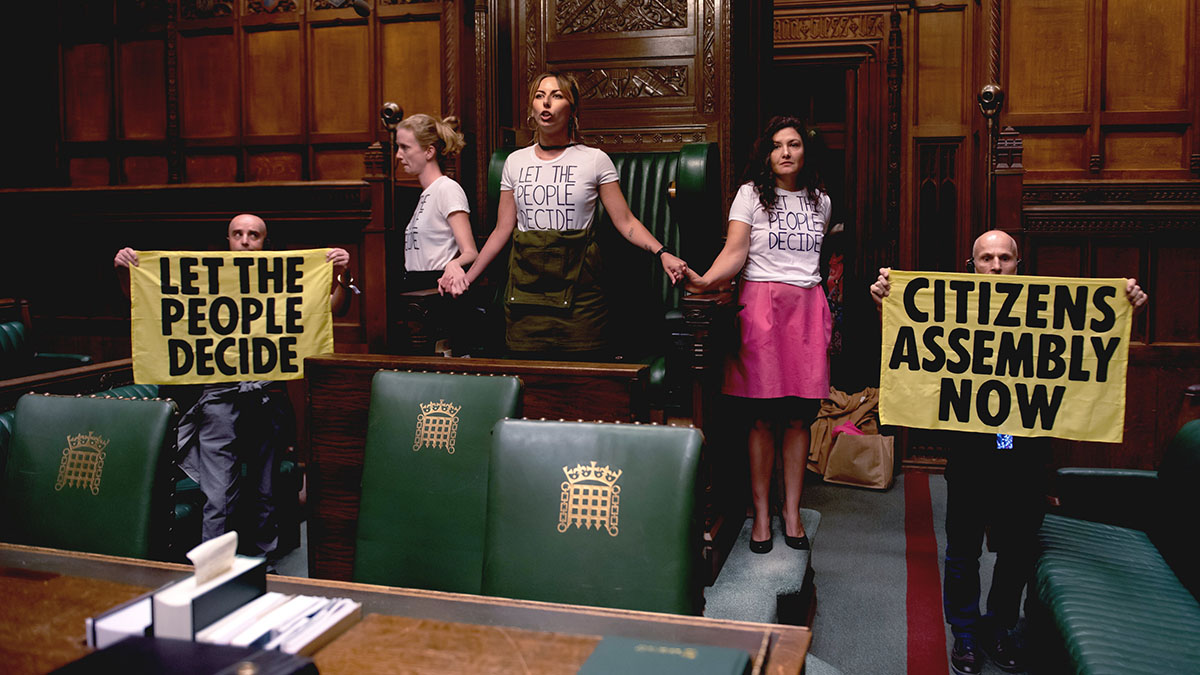
Extinction Rebellion, UK
Imagery by Charles Deluvio, Global

‘None of these are new individually,’ Raymond points out. ‘But what has changed is the speed of acceleration, and how one is increasingly affecting the other to the point that so-called liberal democracies are becoming the exception rather than the rule – their demise ushered in not by enemies of the state, but by increased number of techno-oligarchs running and ruling it.’

Take New Feudalism: some 93.8% of the world’s internet users access social media platforms monthly, while three companies – Amazon, Microsoft and Google – control over 60% of global cloud infrastructure (sources: DataReportal, Synergy Research Group). Similarly, Elon Musk’s personal wealth now exceeds South Africa’s GDP (source: BusinessTech).

These systems, built to monetise attention rather than serve society, function as what the University of Notre Dame’s Lisa Schirch calls a ‘silent pilot steering human behaviour’ – sorting people into fragmented, self-confirming realities.

Layer economic bifurcation on top and the picture darkens further. The World Inequality Report 2026, for example, found that fewer than 60,000 people held three times the wealth of the poorest half of humanity.

Despite this, as our report suggests, an appetite to correct these inequalities is on the rise: 68% of adults across 17 G20 countries support a wealth tax, according to Ipsos, and New York’s new Pied-à-Terre levy – backed by 93% of residents – shows policy beginning to catch up.

Nico Balinthazy Sneako and Louis Theroux in Louis Theroux Inside the Manosphere by Netflix, US
Meanwhile, nostalgia is filling the vacuum where shared narratives used to live. Across 30 countries, people would rather have been born in 1975 than today, by nearly two to one – despite never having lived through it (source: Ipsos). ‘When nostalgia becomes the dominant political currency,’ notes Chris Sanderson, co-founder of The Future Laboratory, ‘the future stops being a shared project and becomes a battleground.’

Perhaps the most quietly devastating force is the erosion of collective belonging itself. Religious affiliation has dropped at least five points across 35 countries since 2010 (source: Pew Research Center).

In the US and Canada, more than half of people now say talking to AI feels easier than talking to a person – even as longitudinal research links social chatbot use to rising loneliness (source: ZipHealth).

‘When nostalgia becomes the dominant political currency, the future stops being a shared project and becomes a battleground.’
Chris Sanderson, co-founder of The Future Laboratory,
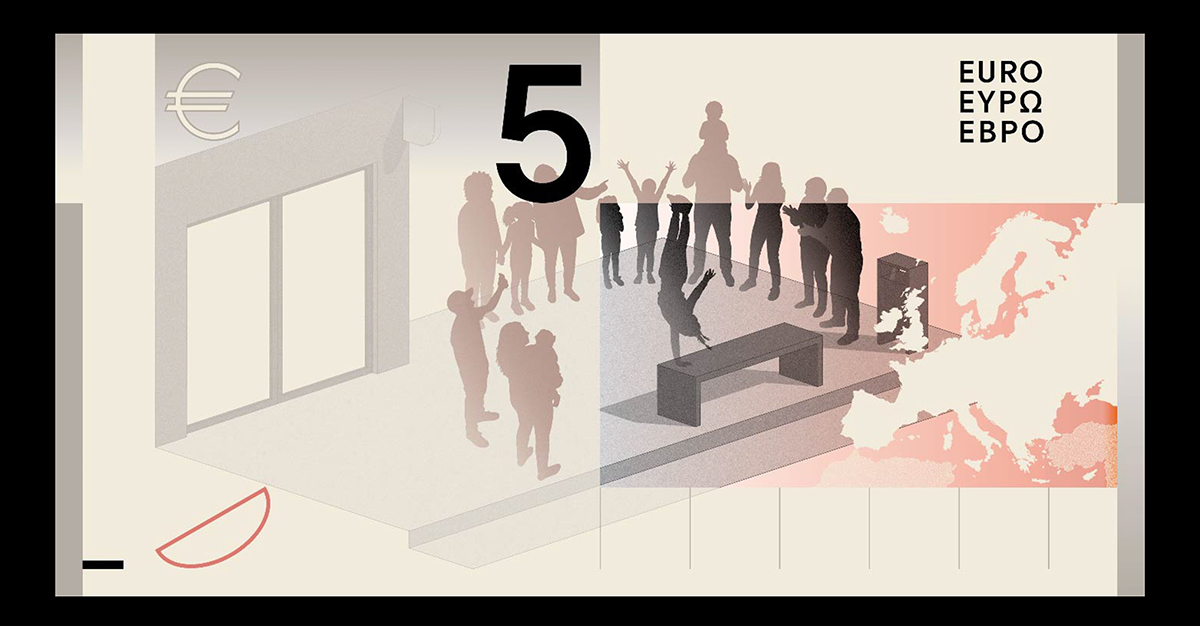
The proposed bank notes redesign for the European Central Bank focus on European culture to reinforce a shared identity, Europe

For brands, concludes Sanderson, the implication is clear: the stable, aspirational mass-market consumers of the past 50 years have not disappeared – they have fragmented into groups defined more by values than demographics – and if brands can help them better understand these values, and guide them towards a more equitable and democratically balanced path, they have everything to win.

‘But if, like Amazon and the Musks of this world, they do as they are doing – we have a pretty big fight on our hands.’

An Introduction to our Global Driver 2027+ : Fragmenting Societies

Our new methodology series is exclusively for partners who can access all six reports and video overviews presented by our co-founder and the brains behind the research, Martin Raymond.

Already a partner? Log in to access the third driver, Fragmenting Societies.

Want to be a partner? Get in touch, today


Explore the latest Global Drivers 2027+ research

Over the coming decade, society will be reshaped by a set of influential and pervasive forces. These are the Global Drivers of change.


Access the Research

Get access to this full report and the entire Global Drivers 2027+ series

Trends intelligence, research, and insights – on demand.  Actionable foresight across 20+ sectors.
Book a demo to view the platform. 

Close

Get in touch to discuss LS:N Global payment plans, demo and trials