This insight is the seed of The Thousand Year Trust, his foundation dedicated to restoring these forgotten ancient, temperate forest ecosystems. ‘At one end we see an unbroken chain of life stretching back to the Bronze Age; at the other, rejuvenated, protective and wisdom-bearing forests and complex natural webs that live a thousand years hence for our future ancestors to enjoy.’
Embodying the principles of future ancestor thinking – see our future-ancestor strategic foresight masterclass series – on Bodmin Moor, the Trust is currently building Europe’s first Atlantic temperate rainforest research station, a hub designed to prove that these forests are Britain’s greatest carbon-sequestering, biodiversity-hosting and mental health-boosting asset.
Borrowing from the long-view temporal perspectives of philosophers such as Derek Parfit, Toby Ord and Roman Krznaric – the name itself is a provocation, swapping short-termist five-year political cycles for a 1,000-year vision – the lifespan of a single great oak. It’s a call to adopt ‘seven-generational thinking’, where decisions are weighed against their impact on our descendants seven generations into the future.
But this isn’t the romantic, hands-off rewilding of our landscape that often grabs the headlines. For Hanbury-Tenison, it is the opposite. ‘It is about re-inserting humans back into nature, and nature back into humans. We are part of nature, not apart from it, and nature needs to sit with and within us, just as we need to sit with and within her.’ Rewilding projects that exclude people are doomed to fail, he adds: ‘Nature is poorer without us, and we are poorer without it.’
He envisages a future when humans will reclaim their role as a keystone species, acting as ‘ecosystem engineers’ who actively restore rather than just preserve. It’s a vision of a future Britain teeming with wolves, lynx and beavers, its rivers running free – a landscape managed not by fences but by a populace that understands its intrinsic place within the wider ecosystem.
This deeply ecological world view informs his startlingly analogue stance on technology. A proud neo-Luddite, he views our headlong rush into artificial intelligence with alarm, citing the human cost of unchecked automation; last year’s graduate intake at PwC, he says, dropped substantially due to AI. For him, this isn’t progress, it’s abdication. ‘I do not think AI is a tool we are creating,’ he warns. ‘I think it is a master we are creating over us.’
Perhaps reflecting on his own time in the city, he cautions against the unbridled optimisation that AI is prodding us towards. ‘If the cost of progress is damaging people’s career paths, stunting how we learn, and more profoundly why we learn, we need to choose a cautionary route.’ Even the creators of AI, he says, are warning us about the pitfalls, and yet we continue to ignore them. While I argue, as we do in our report on The Synthocene Era, that we are entering an age of technological enhancement rather than one of subjugation, he isn’t convinced, especially when it comes to the lack of guardrails around AI.
Citing nuclear power, genetics and the development of biological warfare, we have, he challenges, built very strict containment laws and protocols around them, recognising their dangers and legislating accordingly.
The same too must be done with AI, he says. ‘People keep saying it’s too late… that the Genie is already out of the bottle, but does that really mean it’s too late, or that we simply don’t have the will power to act decisively and with more long-term intentions? If we’re not careful, AI could become an existential crisis more irretrievably damaging than climate change.’
Half humorously, I posit the idea that AI, assessing the sentient species and planetary entities around it, is more likely to conclude that humans are a virus that needs to be controlled and contained, and will probably team up with the planet’s wood wide web and nature itself to do so in order to save the bigger prize: Planet Earth.
Ever the optimist, he believes there is another way: to push towards a fuller, more profound and symbiotic relationship with nature so that the future in many ways echoes the past – a place, in other words, where we de-segregate boundaries between town and country, forest and farmland, savannah and suburbs.
‘We need to be participants in the natural world,’ he concludes, ‘rather than observers, getting our hands dirty in the process so our conscience remains clean, but ever-vigilant. If we don’t think about the future, there is no reason to expect the future to think about us.’
But with Hanbury-Tenison’s wise passionate words of insight, there is every reason to believe that the real and imagined acorns he and his team are planting will flourish to the next millennia and beyond.
You can listen to his Back to the F**kture podcast here or find out more about The Thousand Year Trust by clicking on the link.
Merlin Hanbury-Tenison’s book, Our Oaken Bones: Reviving a Family, A Farm, and Britain's Ancient Rainforests is published by Witness Books, a division of Penguin Random House.


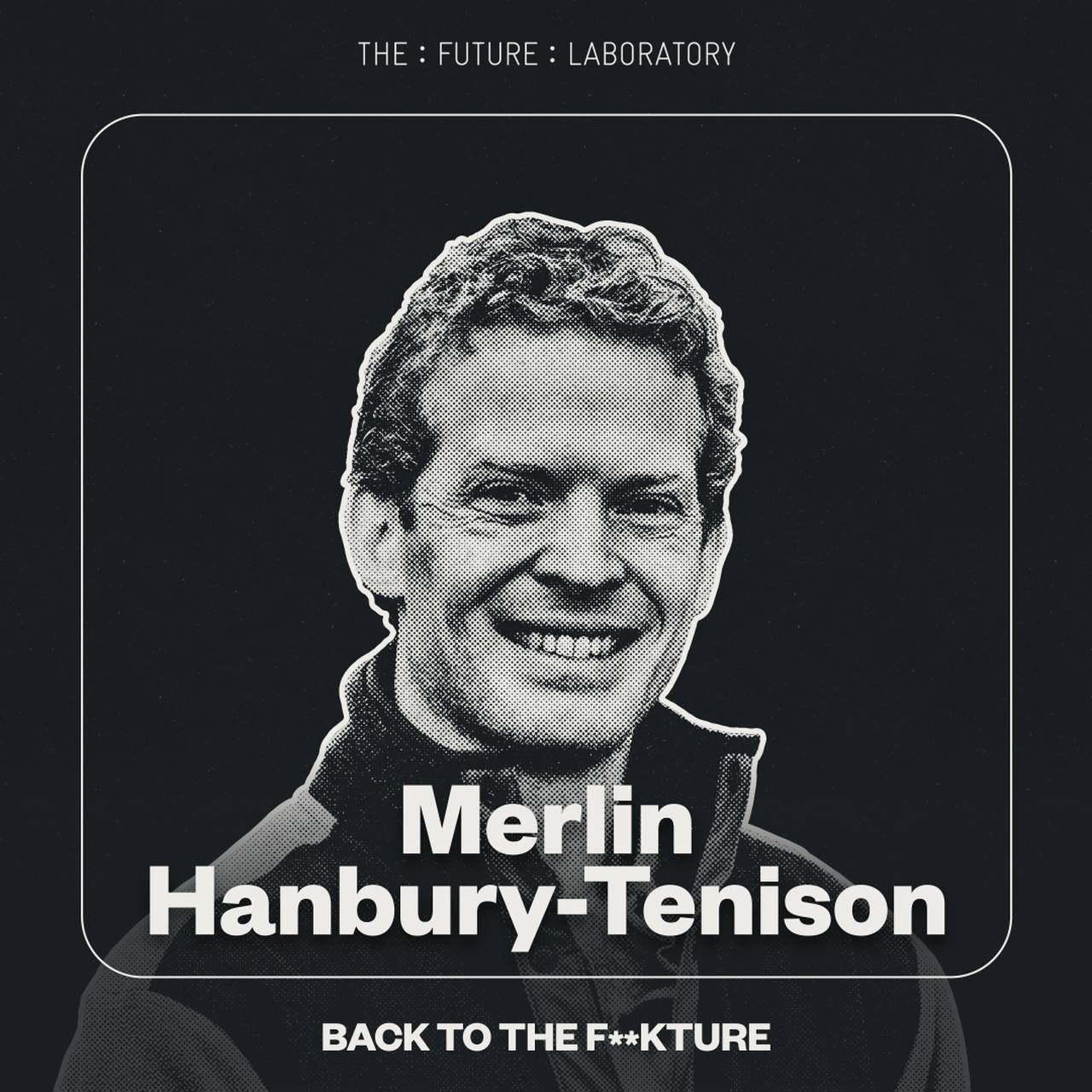 Merlin Hanbury-Tenison