An Introduction to our Global Driver 2027+ : Globalisation Reordered

featured-post
category - ai
Welcome to our Global Drivers methodology series where we unpack the key forces of change driving and defining trends and consumer behaviours for the coming decade.


Launched in a six-part report series, our latest one, Globalisation Reordered, explores how the once unipolar world order is splintering into competing economic and political blocs. The Global South is rising as a powerful third front, and the logic of global commerce is shifting from efficiency to security.

Launching every two weeks, our Global Drivers series offers you a strategic in-depth look at each of the six drivers – Colliding Technologies, Diverging Demographics, Fragmenting Societies, Climate Adaptation and Resource Scarcity, Globalisation Reordered and Urbanised World. The fifth report in our series is Globalisation Reordered.

9 October 2026

Author: The Future Laboratory

Image: Helping Britain Invest Through It All by Wonderhood Studios for Hargreaves Lansdown, UK

‘As we’ll learn,’ says The Future Laboratory co-founder Martin Raymond, ‘ongoing planetary instability is a key factor re-ordering the contours of globalisation. The post-Cold War vision of a singular, integrated global economy is splintering, replaced by a multi-polar world of competing economic blocs, divergent regulatory regimes, resurgent nationalism and new kinds of proto-patriotism, which are already rolling back race, gender, culture and environmental laws that increasingly put our planet and its people in jeopardy.

This is politics of the short term, where consensus has been deliberately replaced by conflict, and indeed, any attempt at a consensus is regarded as a weakness to be exploited.’

Global South ascending

But there are positive signs too. The BRICS nations – Brazil, Russia, India, China, South Africa, Egypt, Ethiopia, Iran and the UAE – now collectively account for 40% of the world economy, according to Boston Consulting Group, symbolising a definitive shift in economic gravity towards the Global South. This geopolitical fragmentation is undoing decades of integration.

‘Globalisation was seen as a positive-sum game that could offset the zero-sum game of geopolitics,’ explains Eswar Prasad, senior professor of trade policy at Cornell University. ‘Now that balancing force has gone. Even the traditional alliances are splintering right now. The world order is splintering before our very eyes.’

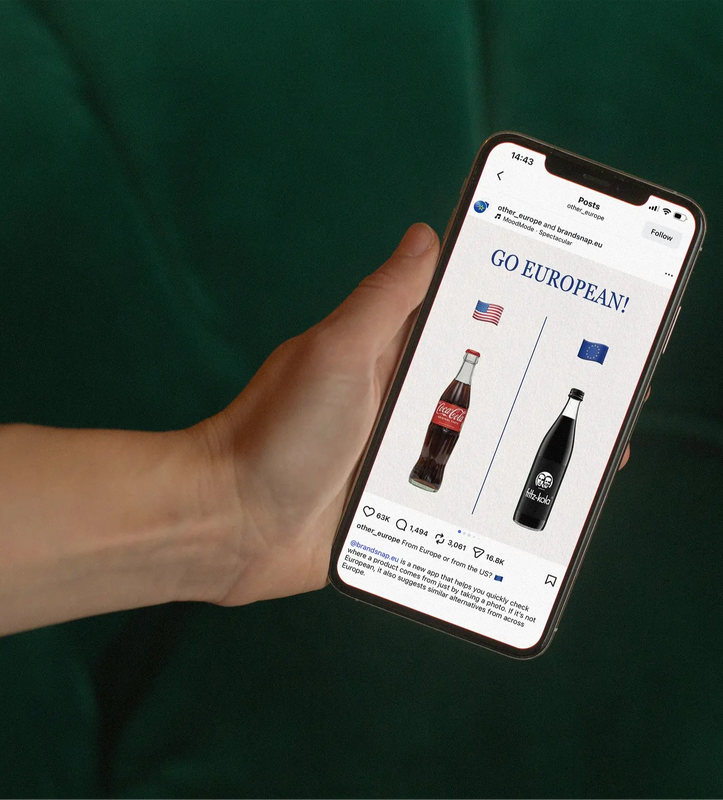
Brandsnap is an app that helps you quickly check where a product comes from and suggesting European alternatives to encourage local consumption, Europe

Hyper-localist threats

This polarisation is also affecting a key consumer behaviour we identified in 2008, when we first coined the term Bleisure to describe the growing number of Millennials adopting borderless, digital-first behaviours to accommodate a new kind of work, rest and play ethic.

For almost two decades, these digital nomads were mainstream archetypes, ‘permalance’ travellers who built careers on the assumption that the world was borderless. That assumption is now being structurally dismantled, as our report indicates.

The desire to move has never been stronger. According to The Economist, roughly 4m people left 31 Western nations in 2024, up 20% from pre-pandemic levels, with Americans – thanks to the impact of Trump – relocating to Europe in numbers not seen in generations.

Yet the world they are moving into is becoming simultaneously more conditional and more contested. Bali introduced a £45,000 ($60,000, €52,000) annual income threshold for its remote work visa, explicitly citing cultural friction and rising housing costs caused by foreign arrivals, while over-tourism protests – in Barcelona, Venice, Paris, Ibiza, Rome – are becoming regular occurrences across the EU.

Collapsing trust

This hyper-localism reflects a broader fortress mentality spreading from public policy into public sentiment. Edelman’s 2026 Trust Barometer, for example, found trust in foreign companies collapsing globally, with the widest gaps in Canada, Japan and Germany. More than a third of people want fewer foreign companies in their market, even at higher prices.

So, what does this mean for our brands, businesses and organisations? Well, for one, we need to stop assuming a referee will step in – leverage decides things now, not agreements.

We also need to treat geopolitics like a supply chain risk, not background noise. Get a real footing in the Global South while it’s still taking shape. And build around the broken institutions, not through them – cities, middle powers, direct relationships.

And for businesses navigating a fractured global order, the frameworks worth building should not be dependent on institutions losing authority or on the short-term whims of an oligarch-like president, but on bilateral relationships grounded in demonstrated shared interest and local values – so glocalisation, rather than globalisation, where we build from the inside out, rather than coming from the outside in.

Photography by Diogo Lemos, Portugal

Finally, we need to look to the long term. This week, Starbucks, perhaps one of the more environmentally vocal brands over the past two decades, has announced that it will be rolling back most of its benchmark environmental and sustainability goals, despite huge opposition from its own employees and loyal Starbucks supporters. This isn’t about brand ideology, it’s about politics – Trump’s slash-and-burn politics – and Starbucks has become yet another brand that has bent a knee to his capriciousness.

But there’s a backlash rising, says Raymond. ‘Brands like Starbucks should remember this when decisions are based on bad politics, short-termism and holding two fingers up to your customers. Trust is collapsing, yes, but it’s as much about brands no longer believing in people as it is about people no longer believing in brands.’

‘Brands like Starbucks should remember this when decisions are based on bad politics, short-termism and holding two fingers up to your customers.’
Martin Raymond, co-founder of The Future Laboratory

Our new methodology series is exclusively for partners, who can access all six reports and video overviews presented by our co-founder, and the brains behind the research, Martin Raymond.

Already a partner? Log in to access the fifth driver, Globalisation Reordered.

Want to be a partner? Get in touch, today


Explore the latest Global Drivers 2027+ research

Over the coming decade, society will be reshaped by a set of influential and pervasive forces. These are the Global Drivers of change.


Access the Research

Get access to this full report and the entire Global Drivers 2027+ series