


Should luxury creatives feel scared for their jobs? Absolutely not, according to a growing number of brands that are curious about generative AI but still need in-house talent to keep it on-brand. Italian Vogue, known for its trailblazing photo shoots, used AI to create a background to its May 2023 cover starring Bella Hadid. Vogue International will even put the light on emerging AI artists at the Milan-based PhotoVogue festival in November 2023. ‘The possibilities are endless, and the only limit is good taste and creativity,’ Alessia Glaviano, director of the festival, told Vogue Business.
Fashion brands are also experimenting with the technology: Valentino produced an AI-generated campaign for its new menswear line; Casablanca enlisted a British photographer and AI artist to produce the campaign for its spring/summer 2023 collection; and Jacquemus went viral with its Le Bambino bags turned into buses on the streets of Paris – all while Moncler used AI to promote its latest Genius collaboration. Smaller brands like Sheep Inc., a high-end knitwear specialist, claim they now have the ability to produce high-quality imagery in a week instead of two months via AI.
Continue the conversation: Do your clients see AI as a utopia or a dystopia? Do they know that campaigns from luxury brands can be generated by AI instead of a photographer?
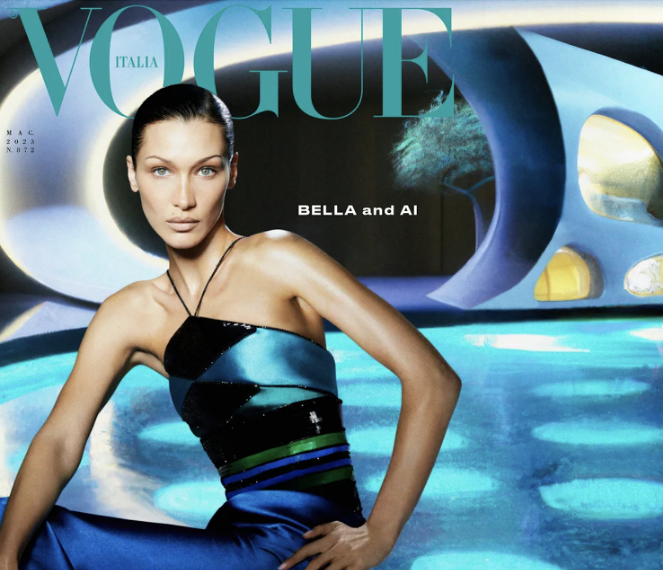 Images: Bella Hadid on the May 2023 cover of Vogue Italia. Photo by Carlijn Jacobs. AI art by Chad Nelson.
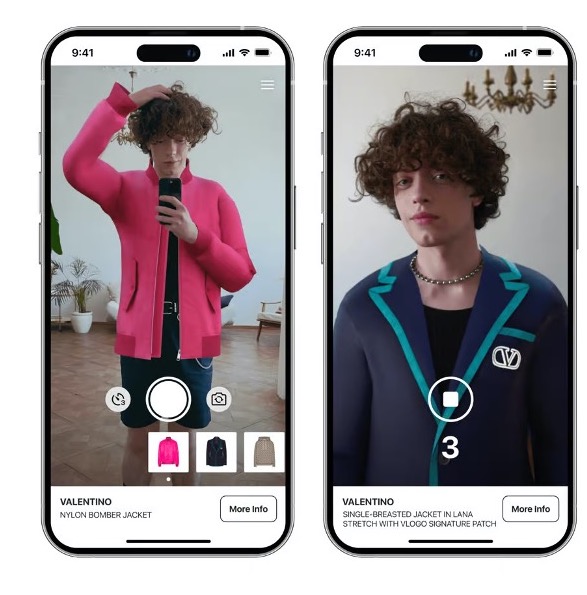 Image: Maison Valentino partnered with Farfetch-owned AR expert Wanna to launch virtual try-ons
Trying out luxury garments from home is already a reality for Maison Valentino's clients. Via a partnership with Wanna, an augmented reality (AR) technology company owned by Farfetch, one can enjoy a virtual try-on experience of the maison’s Urban Flows autumn 2023 collection – including the ValenTie, an accessory only available to pre-order and try on online.
Christine Marzano, founder and CEO of 3D clothing try-on tech provider Bods, says the next step is for brands to personalise the virtual try-on experience by borrowing from gaming technology to dress up customer-created avatars, generated with AI, in photorealistic 3D product renders.
But she is cautious about scaring the luxury clientele off. ‘Many fashion customers are not gamers, and we need to make the technologies we put in front of them easy to use,’ says Marzano. ‘You don’t want tech to scare them away – you want it to enhance their experience.’
Continue the conversation: Are your customers aware of Parfums Christian Dior’s online consultation with an AR make-up virtual try-on experience? Would they be interested in the same augmented service to try on jewellery or ready-to-wear?
New York was home to the first AI Fashion Week in April 2023 thanks to the support of Spring Studios and e-commerce retailer Revolve Group. A panel from Vogue Japan, Céline, Adidas, London College of Fashion and Revolve selected 10 emerging AI designers who each showed a collection of 15–30 looks, all generated by AI and fit for physical production. Judged by the public via online and in-person voting, the winning collections will be made in real life and sold via Revolve’s luxury site.
On the runway, Marc Jacobs surprised attendees in June 2023 with show notes entirely written by ChatGPT. The technology, it turns out, ‘is not yet much of a fashion critic’ according to The New York Times. Although the creative flow of AI might be unstoppable, it still needs a human touch to generate real emotions.
Continue the conversation: Are your clients ready to wear garments generated by prompts instead of sketches? What are their thoughts on digital fashion shows where anyone can sit in the front row?
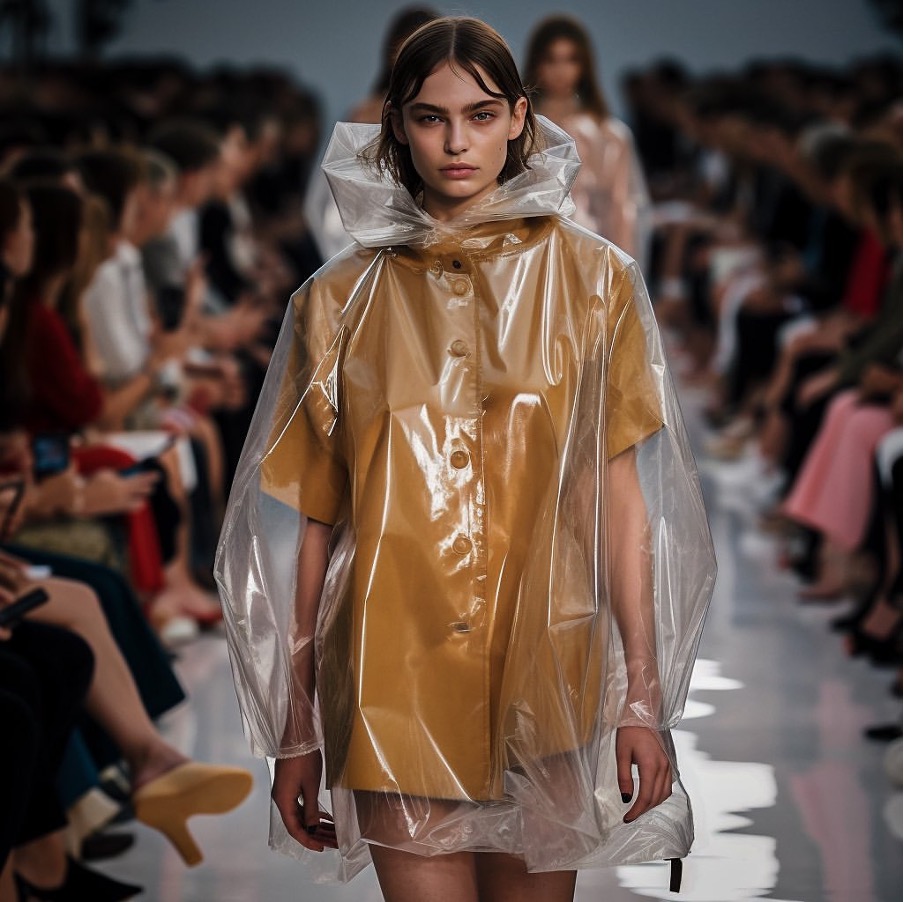 Images: AI artist José Sorrel, aka Paatiff, won the first prize at AI Fashion Week in May 2023 for his 'Futuristic Old Soul' collection
