Beauty Futures: Thrive or Dive?

featured-post
beauty
sector - beauty

At The Future Laboratory, we’ve been exploring how emerging consumer values are reshaping not only beauty, but culture itself. In an age when algorithms dictate desire, the real luxury isn’t perfection – it’s curiosity, awe and emotional depth. 


For over a century, beauty has promised self-expression but delivered new forms of control. Today, as we stand at the edge of another transformation, the question is no longer what beauty looks like – but what it’s for. Beauty has always mirrored the moment – revealing what society values and who it chooses to celebrate. Yet despite unprecedented diversity and digital reach, beauty has never looked more alike.
 

From Hollywood glamour to Instagram’s poreless perfection, beauty’s evolution has simply traded aspiration for automation. Platforms that promised liberation have delivered imitation. Algorithms reward what we already know; filters flatten what makes us unique. We scroll faster, filter harder and age in public. Beauty now moves at the speed of software – updating itself before we’ve even caught up. What should have broadened our horizons has narrowed our imagination. This is familiarity masquerading as progress. 

This acceleration has produced what Dazed magazine calls undetectable beauty – frictionless, filtered and emotionally flat. What’s being lost isn’t just aesthetic diversity, but cultural depth, intimacy and joy. When visibility depends on compliance, individuality becomes invisible. The system doesn’t just shape what we see, it rewires how we see ourselves. And homogeneity no longer lives only in faces, but in formulas, fonts and feeds. 

As Ayanda, host of podcast Soul Salon, puts it: ‘How joyless our society must have become if we find joy in the process of individually, isolatedly beautifying ourselves using these consumerist products that we are taught to glorify.’ Yet within this cultural fatigue lies rebellion. Consumers are rejecting the algorithm’s script, instead craving beauty that feels human again: sensory, expressive, imperfect, alive. 

Published by:

14 January 2026

Author: Rhiannon Hudson

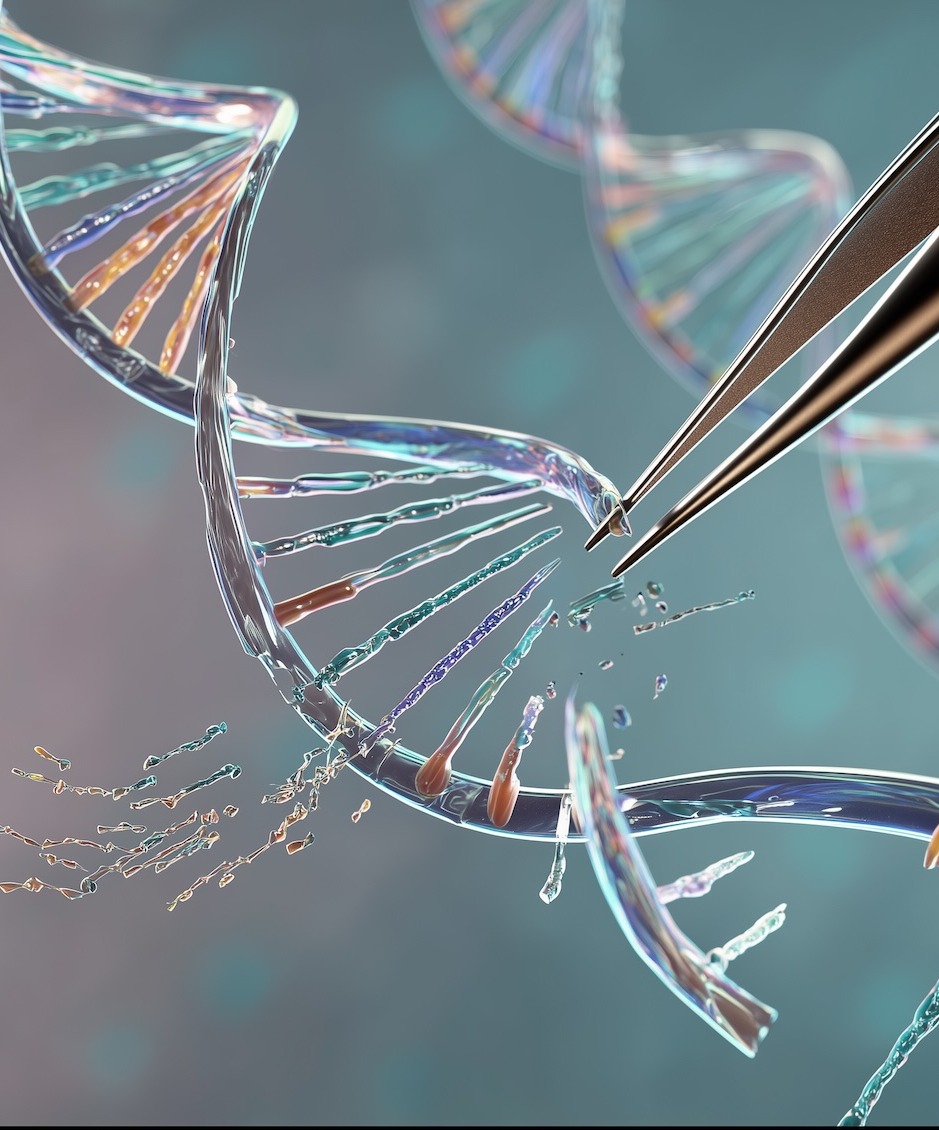
Image: AI Imagery by The Future Laboratory

Share

They want meaning, not polish; identity, not imitation. From ritualistic care to regional storytelling, beauty is splintering. It is becoming plural, personal and political. Just as biodiversity protects eco-systems, so cultural diversity sustains creativity. Without it, beauty becomes fragile, unable to adapt, evolve or survive disruption. The question isn’t whether algorithms have flattened beauty – it’s whether the industry has become complicit in its own dilution. And as luxury redefines itself around emotion and experience, beauty is leading the charge: 

Beauty will be to the luxury industry what fashion has been since the 1990s – the driver of change, the benchmark of future expectations 

To truly understand the significance of this shift, we must first examine the foundational forces moving it forward, starting with how we discover beauty today.  

‘How joyless our society must have become if we find joy in the process of individually, isolatedly beautifying ourselves using these consumerist products that we are taught to glorify.’
Ayanda, host of podcast Soul Salon
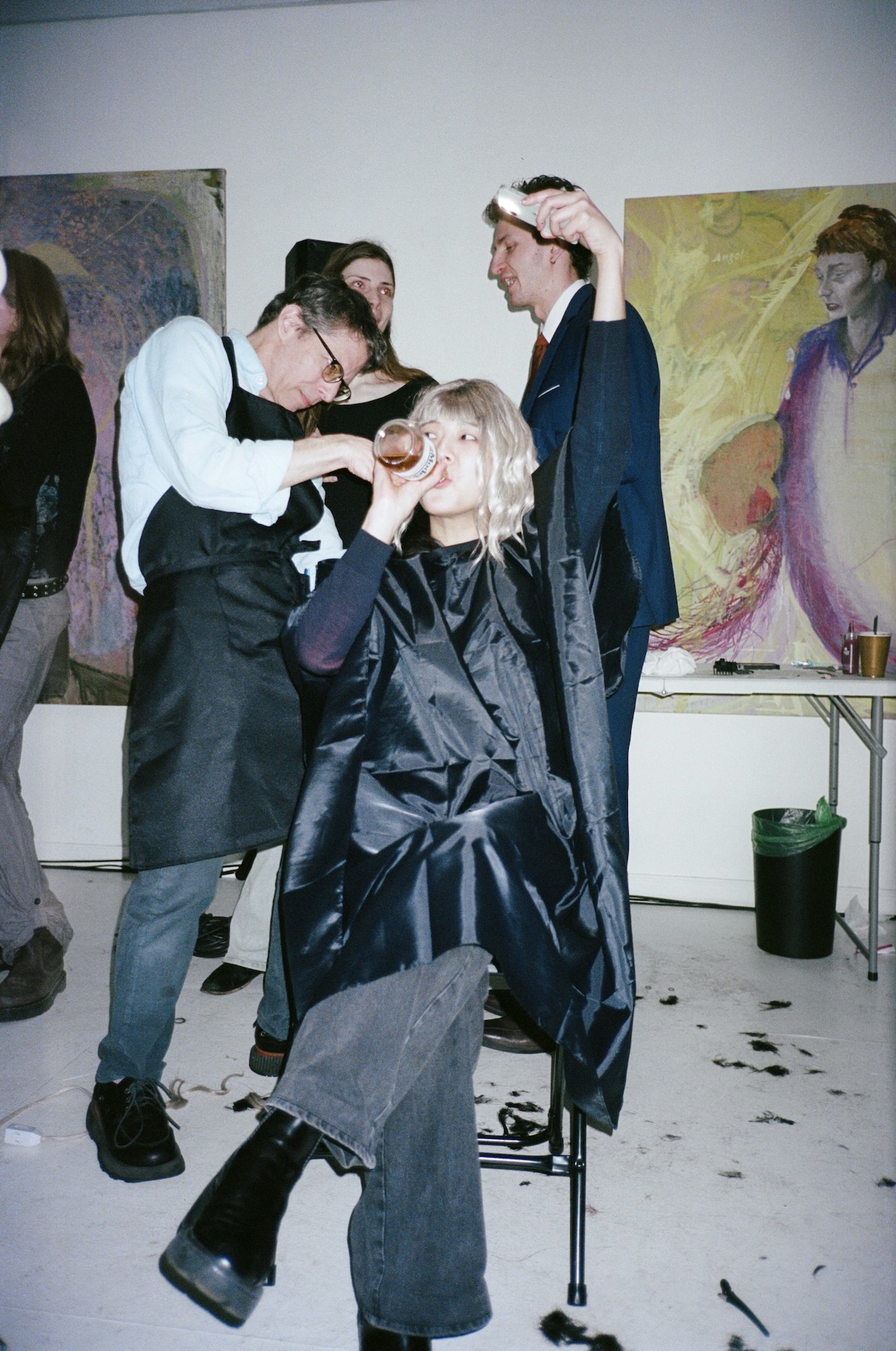
Photography by Taryn Segal. Courtesy Lubov, New York US

Algorithmic Echoes 

Digital spaces have rapidly become echo chambers. Between popular platforms such as TikTok and Instagram, consumers are teaching and training algorithms to confine them into a bubble where all their beliefs and tastes are validated, celebrated and never challenged. And it’s not just news or politics this affects – this is happening in beauty too. 

We’re seeing a cultural homogenisation where the same beauty ideals are reinforced over and over again. And often, those ideals are shaped by the biases already baked into the technology and the people who built it. So-called Instagram Face, for example, rewires our brains: repeated exposure to symmetrical, smooth faces triggers dopamine spikes, creating neural shortcuts where familiarity becomes addictive. 

The Blandification of Brand 

Walk into any beauty retailer and you’ll see hundreds of brands on the shelves. But most of them are following exactly the same playbook – same ingredients, same manufacturers, same aesthetic. But recent research shows people are getting tired of it. They’re exhausted by constant launches, products that get worse over time and messaging that says nothing. Rachel Hirsch, founder of Wellness Growth Ventures, tells Beauty Independent that the next wave of winning brands won’t just be led by visionaries – they’ll also be led by operators – brands rooted in community, real personalisation and bio-individuality, not blanket claims that could apply to anyone. 

Beauty as Privilege 

Health is increasingly becoming the new benchmark for beauty. Skin, in particular, has become a visible reflection of internal wellbeing. In a recent Euromonitor survey, half of respondents defined beauty as ‘looking healthy’ – a number that continues to rise as people prioritise feeling good over looking good (source: Metagenics). 

But while this signals progress, it also reinforces a narrow, optimised, status-led ideal. Through biohacking, wearables and longevity culture, beauty becomes a quantified project – one tracked, compared and critiqued. 

Professor Meredith Jones from Brunel University in London calls this makeover culture: a world where value is assigned through visible improvement. She notes that this extends beyond beauty – to fitness, fashion, home design and even education – all reframed as proof of discipline and worth. 

Ultimately, the aesthetic of health has become its own hierarchy. Smooth, poreless, inflammation-free skin signals elite self-management – the latest iteration of perfectionism. Healthy beauty is the new status symbol, for better or for worse. 

So, let’s examine how these cultural shifts are manifesting in the market right now, and how brands can move beyond the algorithm to design for what people truly need now: curiosity, awe and emotional depth. 
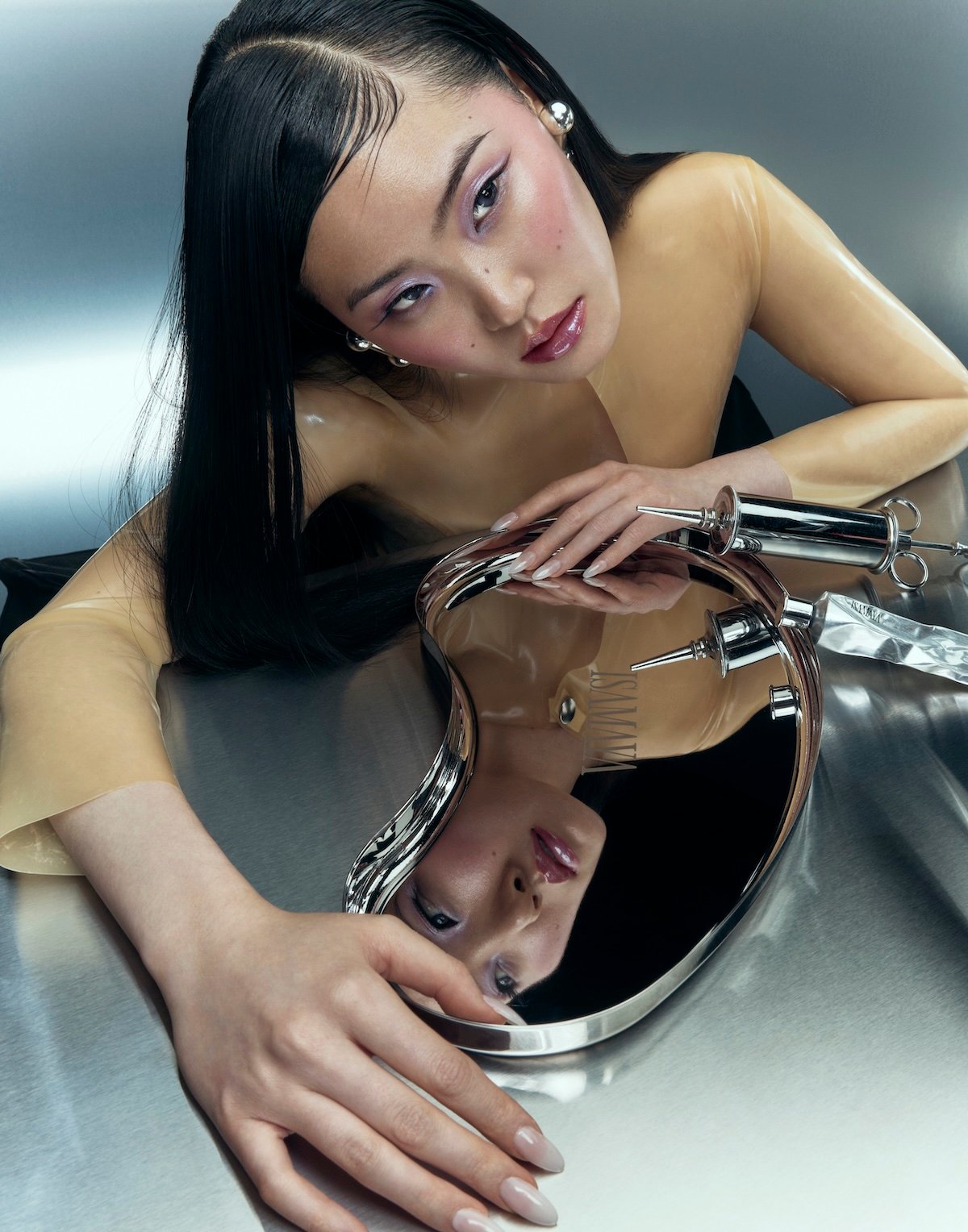
Isamaya Hyalurolip, UK
The Periodic Fable by The Ordinary. Created by Uncommon, UK

Anti-fluency Aesthetics 

As algorithmic echoes prevail, there’s a real opportunity here for brands willing to jolt us out of the digital fog. The sector’s next role isn’t reinforcing what we already know – it’s opening up new, even contradictory, ideas of what beauty can be. 

In response, brands, creators and consumers are embracing provocation, distortion and strangeness to disrupt beauty’s sameness – echoed in exhibitions like Dirty Looks at Barbican (September 2025–January 2026), which explore imperfection and decay as new expressions of allure. 

On social media platforms, users are reclaiming wrinkles as canvases for playful, colourful make-up, calling it anti-Botox or anti-filler beauty. One example is Beetlejuice Lips, a layering of neon and black pigment to create a crackled effect. Elsewhere, in music, Chappell Roan blends theatricality and ‘clowncore’ make-up, rejecting polished beauty for storytelling, character and raw emotion. When strangeness is intentional and rich like this, we enter what’s called the aesthetic uncanny – a space that fascinates rather than repels.  

‘When we’re curious, the brain’s dopaminergic system kicks into gear… Curiosity makes us feel good about discovering something new,’
Neuroscientist Anne-Laure Le Cunff.  
AI imagery by The Future Laboratory

Unexpected Collaborations 

The antithesis to the blandification of branding is cultural depth – ideas that honour nuance, locality and lived experience. As the boundaries between culture, commerce and community blur, innovation now thrives in the in-between.  

Consumers no longer see collaboration as a novelty – they expect it to be meaningful, resonant and surprising. With 74% of Gen Z wanting to see brands engage with things they love (YouTube), and 67% of consumers craving fewer but higher-quality partnerships (Highsnobiety), the era of surface-level collaborations is ending. In its place, we’re seeing cross-pollination: beauty aligning with sport, wellness with gaming, fragrance with music. These collisions create emotional entry points into culture, allowing brands to connect through values rather than verticals. 

When done well, these partnerships reframe brand identity – shifting from category to community, and from product to platform. Take Charlotte Tilbury and F1 Academy – a beauty brand entering the adrenaline-fuelled world of motorsport to champion female empowerment and visibility. It’s an unexpected but powerful alignment: one built not on aesthetic synergy, but on shared purpose. 

This is how brands will combat the blandification of beauty – by engaging the wider cultural zeitgeist, embracing risk and creating new worlds of meaning. 

The Acceleration Economy 

As beauty becomes synonymous with health, discipline and data-led self-optimisation, the idea of beauty as privilege sets the stage for the Acceleration Economy. What was once a slow pursuit of wellbeing is now a race towards measurable transformation. 

Brands are fuelling this momentum. Longevity-led start-ups like Elysium Health and Timeline® Nutrition promise cellular renewal through subscription models, while SkinCeuticals’ Custom DOSE delivers personalised serums formulated in under 10 minutes. At the more extreme end, clinics in Dubai and Seoul advertise ‘lunch break’ procedures – injectable contouring or laser tightening done in under an hour – designed for visible, immediate results. 

Privilege once defined by access to advanced science is now being democratised through affordability and speed. Yet this accessibility only heightens competition and burnout, creating a beauty economy driven by pace over purpose. For the beauty industry, acceleration demands a new form of responsibility: to design innovations that deliver progress without perpetuating exhaustion, anxiety or unattainable ideals. 

Beauty today is everywhere, and yet… it risks losing relevance. As Olivia Houghton, insights and engagement director at The Future Laboratory, states: 

‘Beauty has become predictable – and predictable is powerless.’ 

Ultimately, consumers aren’t looking for perfection; they’re searching for meaning – for brands that feel alive, responsive, real, and above all, human. From the rise of strange, anti-fluent aesthetics to the curation of mood and emotion, the future of beauty won’t be coded by algorithms or legacy ideals, but by creativity, courage and cultural intuition. 

This was written for WWD’s Beauty Inc. The Catalysts conference, New York 18:10:25  

‘Beauty has become predictable – and predictable is powerless.’ 
Olivia Houghton, insights and engagement director at The Future Laboratory
Close
Close

Trends intelligence, research, and insights – on demand.  Actionable foresight across 20+ sectors.
Book a demo to view the platform. 

LSN_Logo_bw2_2025 1
Close

Get in touch to discuss LS:N Global payment plans, demo and trials