


The market for luxury NFTs is heating up. By 2030, Morgan Stanley estimates it could be worth £41bn ($56bn, €49bn) (source: Morgan Stanley). It comes as no surprise that many fashion brands are exploring the potential of digital collectibles. As more luxury labels enter the market, however, they must identify their point of difference. Read on for some of the most eye-catching NFT drops from the past year.
Gucci: Comprised of a fashion film co-directed by Floria Sigismondi and Alessandro Michele himself, all the proceeds from the Italian house’s first NFT launch went to the COVAX charity initiative.
Bulgari: Combining two trends in one, the Italian company staged an immersive AI art exhibition to unveil its NFT. The NFT includes moving imagery of the brand’s signature serpent motif.
Dolce & Gabbana: The Italian brand made headlines when it sold its Doge Crown for a notable £1m ($1.3m, (€1.1m) in September 2021. Purchased by fashion NFT collective Red DAO, this asset is rumoured to represent the king or queen of digital fashion.
Louis Vuitton: In an ambitious luxury NFT project, the French house released a video game to mark the brand’s 200-year anniversary. In total, 30 NFTs by digital art superstar Beeple were sprinkled within the game’s mystical setting, to be discovered by players.
Burberry: The British house released its NFT in the popular online game Blankos Block Party, taking the form of a digital avatar called Sharky B. Players who purchased the digital asset won additional in-game powers and a unique virtual outfit.
Continue the conversation: What makes certain NFT projects more successful than others? Consider the importance of community, social-signalling, and clout in this new realm.
.jpeg) Gucci Aria NFT
Gucci Aria NFT
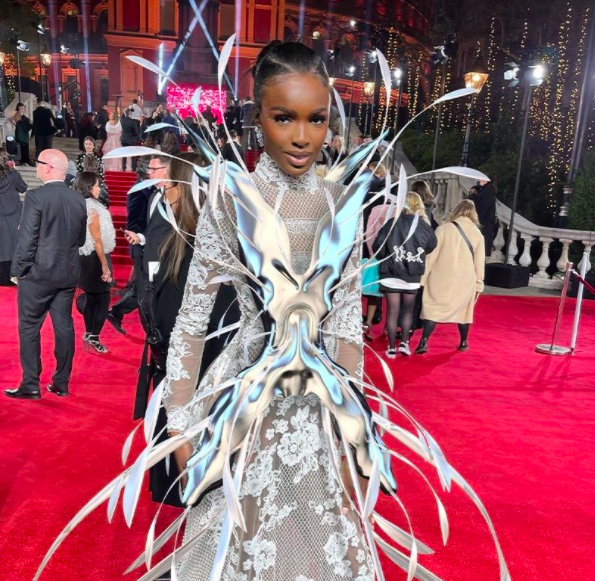 Institute of Digital Fashion
Augmented reality (AR) technology is making its way onto the red carpet. Signalling new possibilities for occasion wear, AR lets luxury brands – and their customers – express themselves in new way. In the future, we can expect bespoke virtual accessories and garments to come alive on social media, complimenting physical clothing while engaging the public and press.
The recent Fashion Awards points to this future of ‘phygital’ red carpets and runways. With the help of AR technology, the Institute of Digital Fashion (IoDF) brought the Fashion Awards’ red carpet to life, applying a digital fashion filter to attendees’ outfits.
While actors, models, and fashion designers posed for photographs, an AR accessory was layered over their dresses and suits using a mobile device, enhancing their outfits with a futuristic metallic bodice. These digital accessories were then sold as NFTs, pointing to a future where red-carpet moments can be transformed into digital collectibles.
Continue the conversation: In the future, red carpet dresses or occasion wear might come with a corresponding virtual accessory. How might you encourage clients to share their virtual accessories on social media?
As global fashion and luxury events migrate to the metaverse, more people are able to attend and experience these moments, while brands have new ways to engage and reward their loyal clients.
POAPs (Proof of Attendance Protocols) present an exciting opportunity for brands to create hype around their events while treating their customers to exclusive experiences. POAPs are digital tokens that register the presence of a person at a particular event, which simultaneously function as badges of belonging within online communities.
To redeem a POAP, a person scans a QR code that redirects them to an NFT. Once they obtain the digital asset, the POAP acts as a ticket granting access to exclusive events, as well as unlocking private raffles or interactive artworks, offering routes for luxury brands to co-create with their digital community.
Continue the conversation: To commemorate and memorialise runway shows – whether real or virtual – luxury brands can consider issuing a POAP for all attendees as an exclusive ‘badge of attendance’
 Dell XPS Youniverse by MPC & YMLY&R
